
Aphid spray recipe
Aphid infestations at this time of year are common, as they are attracted to soft new growth. This year I’ve helped multiple clients manage aphids on their roses, and also managed an infestation on my 400 ranunculus and anemone seedlings, so it’s safe to say I’ve got some decent experience. Here is my go-to recipe for an aphid spray that won’t hurt the ecosystem in your garden. It’s important to understand what we’re doing and why, so I’ve also shared the science behind this.
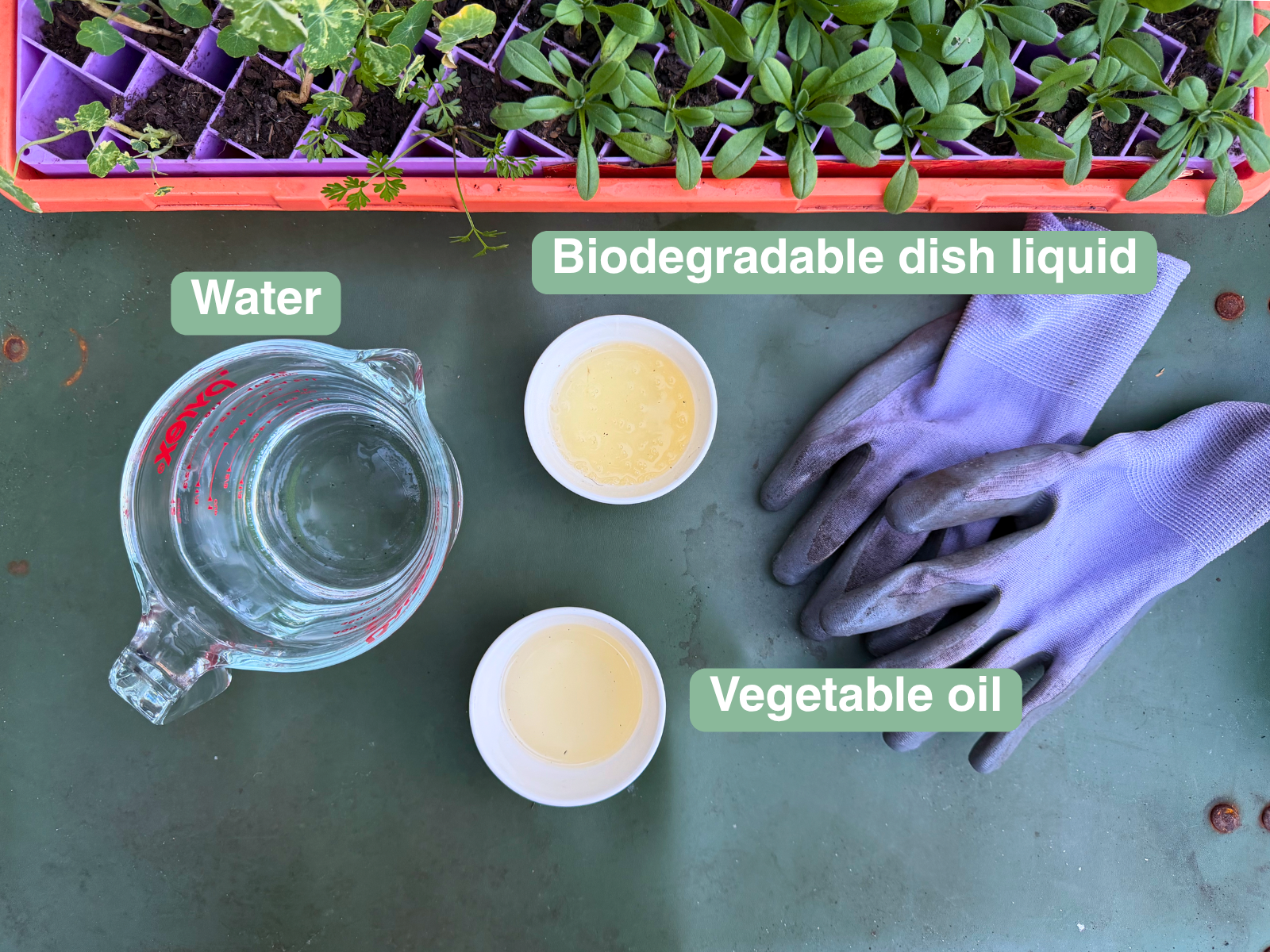
Aphid spray recipe
1 litre water
1 tablespoon biodegradable soap (dishwashing liquid)
1 tablespoon vegetable oil
Directions
Mix well and spray on aphids, making sure to check the undersides of leaves. Spray in the early morning or late evening. Rinse off with water after 20-30 mins so leaves don’t burn or suffocate themselves.
If you've got quite a few plants to spray, I recommend getting a pressure sprayer to save your hand a repeated stress injury from squeezing the spray bottle trigger hundreds of times. It is also critical that you check for beneficial insects such as ladybuds and their larvae before spraying, and avoid them as the spray will also kill them, and we don't want that.
The science behind it
I’m not going to lie, it isn’t a glamorous end for the aphid, but such is life. In this recipe, both the oil and soap have actions that kill aphids, which is why I like to use this recipe - those (literal) suckers don’t stand a chance. In this recipe, the oil is a suffocant. It coats the aphids, blocking its breathing pores (called spiracles, along their abdomens) and suffocates them. This also works on aphid eggs, but the trick is finding the eggs as aphids are very good at hiding them!
Even though this seems like a pretty robust ingredient to kill aphids, we don’t want to just spray our plants with straight oil because:
a) yuck, and
b) it disrupts the leaves’ microscopic pores (called stomata) that they use to take in carbon dioxide, and release water vapour. It would not just suffocate aphids, but also our precious plants. So how do we get the oil off our plants after they’ve killed the aphids?
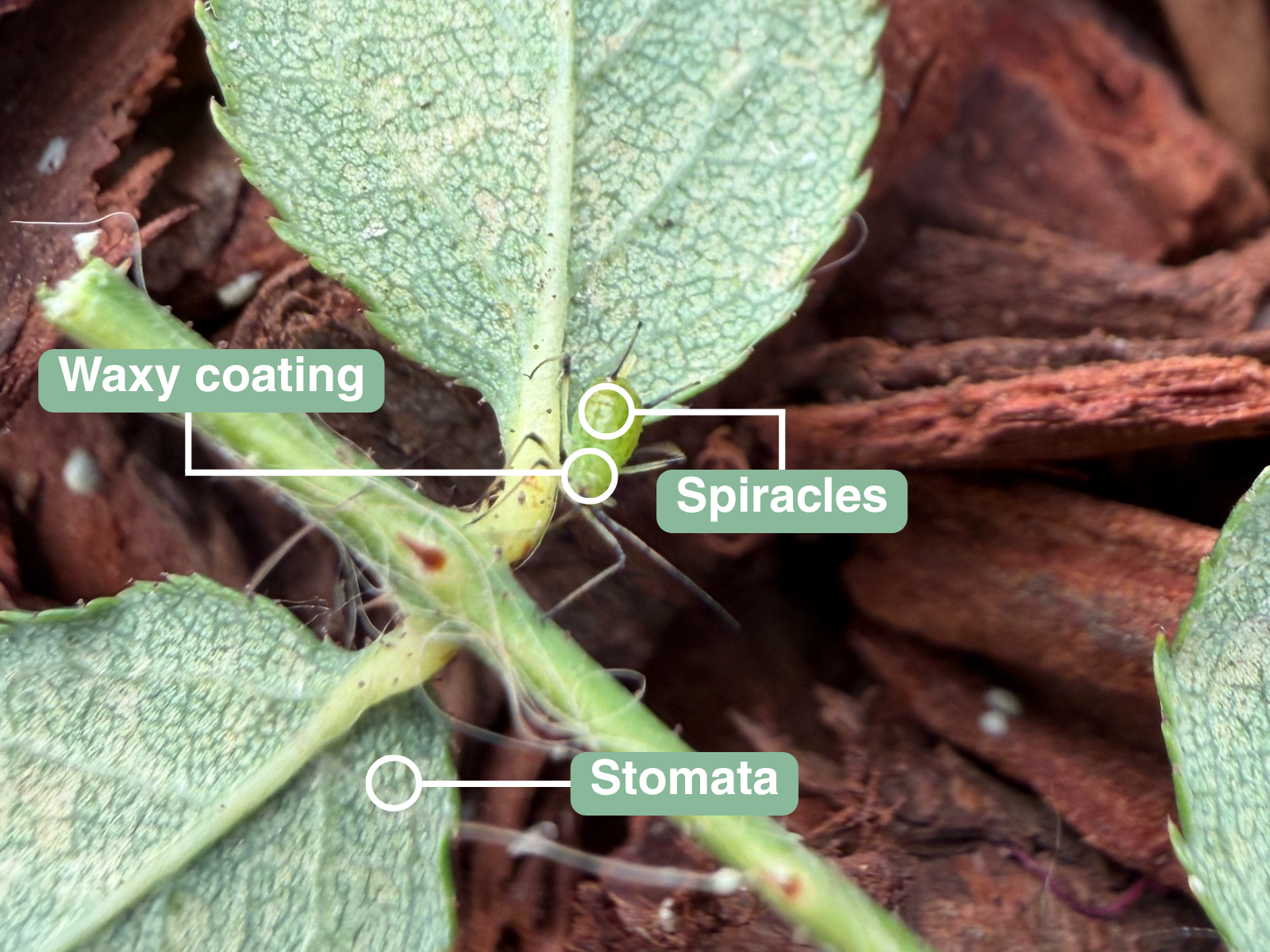
A mature aphid exploring the underside of my rose leaves to find some nutritious sap. The breathing mechanisms of the aphid (spiracles) and leaf (stomata) are highlighted, as is the waxy coating of the aphid.
To make sure we don’t hurt our plant leaves, we need to be able to wash the spray off, so our spray needs to have a water base. Because oil and water don’t mix, we add in a third ingredient, soap. Soap is made up of molecules that have a water-loving end, and an oil-loving end. This allows us to mix the oil and water so it can be sprayed on, and washed off, to only kill the aphids and not our plant leaves.
The soap has two other important actions in this spray:
As a surfactant: Water molecules have high surface tension, which is why you see water droplets form on leaves or insects’ backs. Adding the soap breaks up the water-love in, so instead of forming beads of water on the aphid’s backs and rolling right off, it relaxes the water and allows it to spread over and completely cover the aphid.
As a degreaser: Aphids have a thin waxy (fatty) coat to keep their moisture locked in, and repel water (otherwise they’d dissolve away!). The oil-loving end of the soap makes friends with this waxy coating. Since the soap is also connected to water, is helps remove this layer, just like getting the grease off your dishes. This exposes the watery insides of the aphids, which quickly dry out quickly, and also allows the oil to be very thorough with it’s suffocation action.
Now you know how some basic household ingredients work to kill a destructive pest in the garden, and why we don’t need toxic pesticides that will also kill beneficial insects and disrupt the thriving soil life keeping our gardens healthy and beautiful.
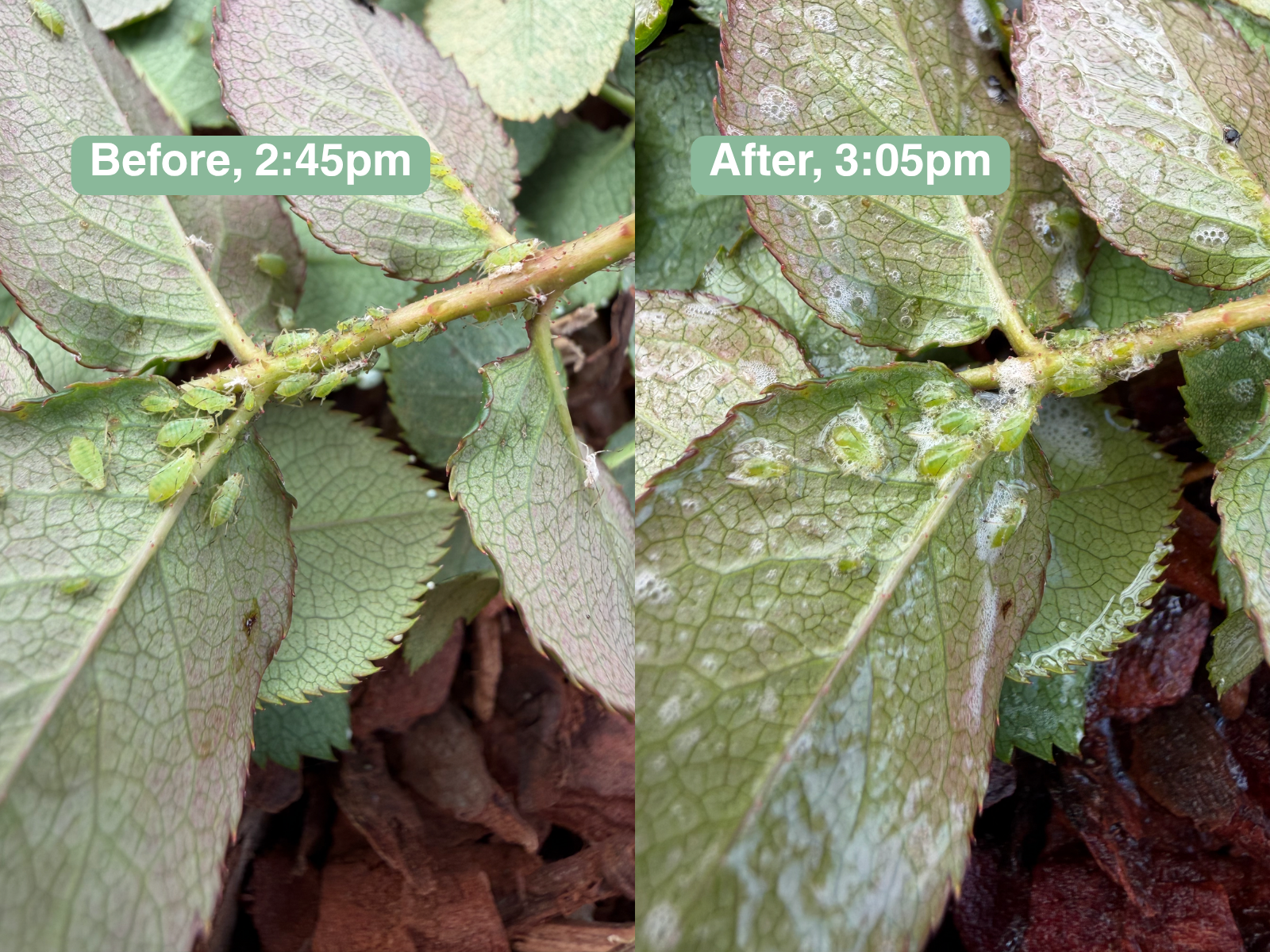
Before/after of this spray recipe applied to aphids on my rose leaves, effectively killing the aphids in 20 minutes. The next step is to wash it off (or dispose of leaves, as I had removed these from the plant).
Recommended products
For the soap, make sure it is truly biodegradable so it doesn’t have adverse impacts on plants or soil. My go-to is the Euca Dishwashing Liquid. If you’re in Melbourne, I get mine from Poyntons (not sponsored - I wish!) as it is affordable and easy to get whenever I need it. The other strong option is castile soap, opt for Australian-made products like the ones from Biome or Four Cow Farm.